
Blog Post Published on: June 19, 2026, by Gabkotech
Modern buildings depend on multiple systems working together every day. Security teams monitor incidents and patrol activities. Facilities teams manage assets, maintenance and service requests. Front-desk personnel oversee visitors, while building managers monitor access, operational performance and occupant needs.
However, these functions are often managed through separate systems, spreadsheets, paper records and communication channels.
When information remains disconnected, building managers may struggle to obtain a complete view of operations. Important updates can be delayed, duplicated or overlooked, making it more difficult to respond quickly and coordinate different teams.
This is why integrated building operations are becoming increasingly important.
Rather than allowing each operational function to work independently, an integrated approach brings relevant information together to support greater visibility, faster decisions, improved efficiency and better building experiences.
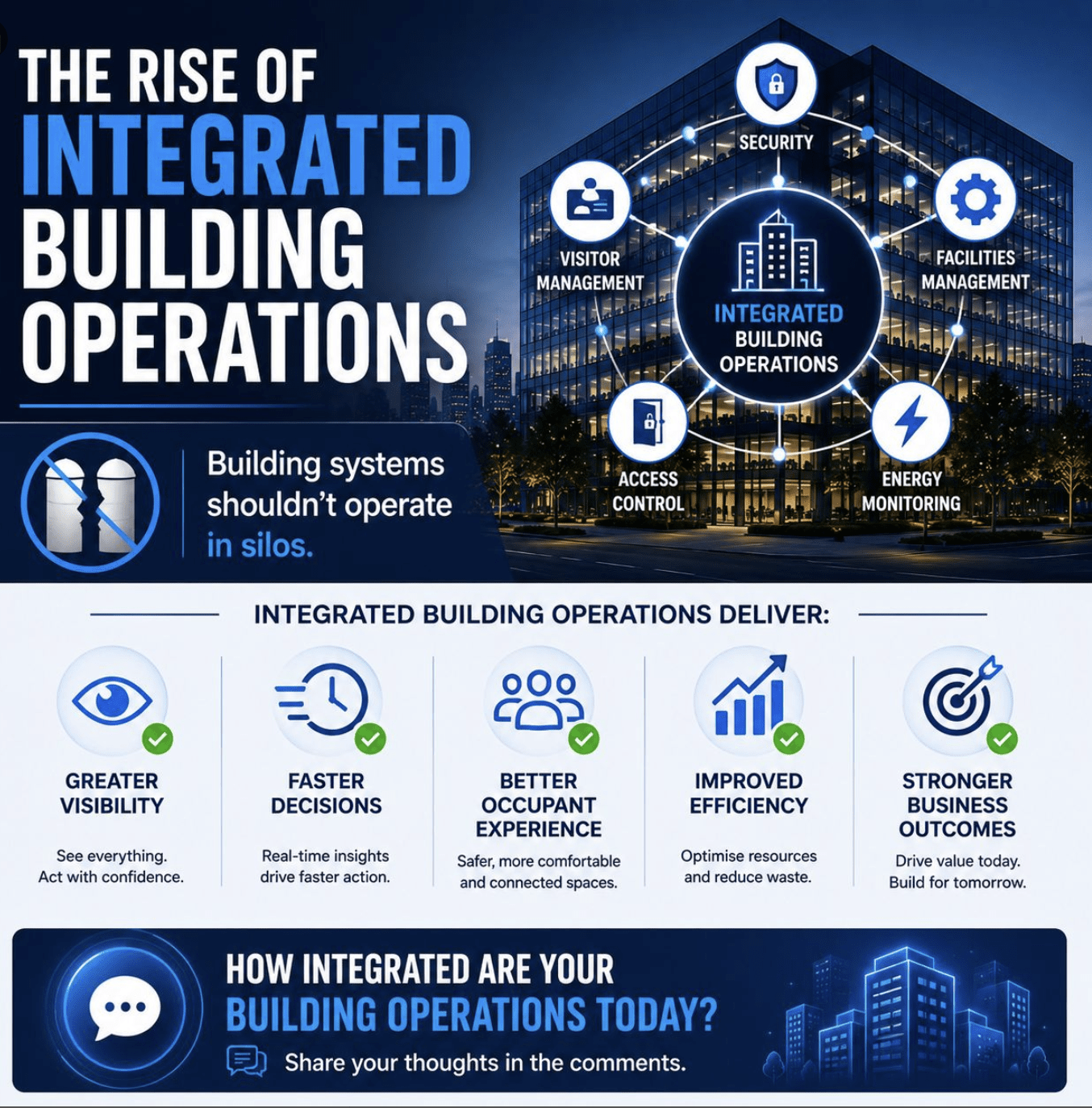
Integrated building operations refer to the coordinated management of different building functions through connected digital systems, shared information and standardised workflows.
Depending on the needs of the property, these functions may include:
The objective is not necessarily to replace every existing building system with one platform. Instead, organisations can connect relevant operational information so that teams gain a clearer and more coordinated view of building performance.
A centralised platform such as the iREP Security Management System can support greater operational visibility by bringing security, workforce and site-management activities into a connected digital environment.
A building may use several effective systems, but operational gaps can still occur when these systems do not communicate or when information remains isolated within individual departments.
For example, a security incident may affect facility operations. A visitor-access issue may require assistance from both the security and facilities teams. An equipment fault may create safety concerns that require immediate escalation.
When each team relies on a separate process, management may receive only part of the operational picture.
Different departments may store information in separate applications, spreadsheets, paper records or messaging groups.
As a result, managers may need to contact several people before understanding what has happened.
When information must be manually transferred between departments, important actions may be delayed.
A maintenance issue discovered during a security patrol, for example, may require several messages or telephone calls before it reaches the responsible facilities team.
Separate systems may use different reporting formats. This can make it difficult to identify recurring incidents, compare performance across buildings or understand how one operational issue affects another.
When updates are communicated through multiple channels, it may be difficult to determine:
Integrated digital workflows can create clearer and more traceable operational records.
Integrated building operations can bring several important building functions into a more connected operational environment.
Security operations generate valuable information about building activities, including incidents, patrol records, access concerns, emergency events and outstanding security tasks.
When this information is digitised and centralised, authorised personnel can gain better visibility of security activities across the property.
The iREP Security Management System supports multiple security and workforce-management functions through a central platform, helping organisations improve operational visibility and accountability.
Facilities teams are responsible for maintaining the assets, equipment and services that support daily building operations.
However, maintenance information is often stored separately from security and operational records.
An integrated facility management system can help organisations manage:
The iREP Facility Management System provides a digital environment for managing maintenance activities, assets, operational tasks and facility-related information.
Connecting facility information with broader building operations can help management identify issues earlier, assign responsibilities more efficiently and monitor progress more effectively.
Visitors are an important part of daily operations in offices, commercial properties, educational institutions and other facilities.
Manual registration processes may create long waiting times and make visitor information more difficult to retrieve.
A digital visitor management system can support a more organised visitor journey through:
The iREP Visitor Management System helps organisations digitise visitor registration and improve visibility of visitor activities within the property.
When visitor information is connected with building security and operational workflows, relevant teams can coordinate more effectively while providing a smoother experience for occupants and guests.
Access information can provide useful insights into how people enter, leave and move through a building.
When access-related information is considered together with visitor, attendance and security data, building managers can gain a clearer understanding of building activities.
This can support:
The objective is not simply to control entry. It is to improve visibility while supporting safe and efficient movement throughout the building.
Energy consumption can affect operating costs, sustainability objectives and overall building performance.
When energy information is viewed alongside occupancy, maintenance and operational data, building managers may gain a better understanding of how resources are being used.
For example, operational data may help organisations identify:
Energy monitoring becomes more valuable when the information contributes to broader operational decision-making rather than remaining within an isolated system.
Greater visibility is one of the most important benefits of connected building operations.
Instead of reviewing separate reports from different departments, authorised managers can obtain a more complete view of operational activities.
This may include visibility of:
A centralised view can reduce the time spent gathering updates and allow management to focus on issues that require attention.
For larger or more complex operations, the Gabkotech Security Integrated Management System (GSIMS) can support centralised monitoring and command-centre operations by bringing relevant security information into a more unified environment.
Integrated information provides management with a clearer view of activities across different departments, systems and locations.
Rather than requesting separate updates, authorised users can access relevant operational information through connected dashboards and reporting tools.
Greater visibility can help organisations identify risks, delays and unresolved issues earlier.
Building managers often need to make decisions quickly.
When relevant information is available in one operational environment, management can spend less time collecting updates and more time evaluating the appropriate response.
Real-time information can support faster action during:
Disconnected processes can result in repeated data entry, duplicated work and unnecessary communication.
Integrated digital workflows can reduce administrative effort by allowing information to move more efficiently between relevant teams.
This can help organisations:
Building operations affect everyone who uses the property.
Delayed maintenance, inefficient visitor registration and poor communication can create inconvenience for occupants and visitors.
Connected operational systems can support:
An improved occupant experience can contribute to stronger satisfaction and confidence in building management.
Operational improvements can create value beyond day-to-day building management.
Better information may help organisations optimise resources, reduce unnecessary administrative work, improve service quality and make more informed long-term decisions.
Over time, connected building operations can support:
Building operations change throughout the day.
A visitor may arrive unexpectedly. An equipment fault may require urgent attention. A security incident may need immediate escalation. A maintenance request may affect occupant comfort.
If management receives information only through end-of-day reports, the opportunity for early intervention may already have passed.
Real-time operational information helps relevant teams understand:
Digital reporting tools such as the iREP Incident Report System can help authorised personnel submit incident information, supporting evidence and operational updates through a more structured process.
Traditional building management is often reactive.
A problem occurs, someone reports it and the responsible team responds.
Integrated operational information can help organisations move towards a more proactive approach by identifying patterns before they become larger problems.
For example, management may discover that:
These insights can support preventive action and continuous improvement.
Following significant incidents or operational events, the iREP After Action Review System can also help organisations document observations, identify lessons and track recommendations for future improvement.
Building integration does not necessarily require organisations to replace every existing system at once.
A phased approach may be more practical.
Review how information is currently managed across:
Identify where information is duplicated, delayed or difficult to retrieve.
Begin with operational areas that create the greatest risk, inefficiency or lack of visibility.
These may include incident reporting, maintenance requests, visitor registration or security monitoring.
Create consistent workflows for reporting, assigning, escalating and closing operational issues.
Provide authorised teams with access to the information needed to coordinate activities and make informed decisions.
Use dashboards and reports to identify trends, recurring issues and opportunities for improvement.
Buildings are becoming more complex, and expectations for safety, efficiency, sustainability and occupant experience continue to increase.
Managing each operational function in isolation may limit visibility and make coordination more difficult.
Integrated building operations provide a more connected approach by bringing relevant systems, people and information together.
The objective is not simply to add more technology.
It is to help organisations:
As buildings become smarter, the ability to connect operational information will become increasingly important.
Are your security, facility, visitor and operational teams working from connected information—or are important updates still separated across different systems and communication channels?
Gabkotech Innovations provides digital security, facility and operational management solutions designed to improve visibility, accountability and coordination.
Explore how iREP and Gabkotech’s integrated solutions can support smarter and more connected building operations.
REQUEST A CONSULTATION OR PRODUCT DEMONSTRATION




















26 Sin Ming Lane, #05-127 Midview City, Singapore (573971)
No. 47A, Jalan Indah 16/12, Taman Bukit Indah, 79100, Iskandar Puteri, Johor